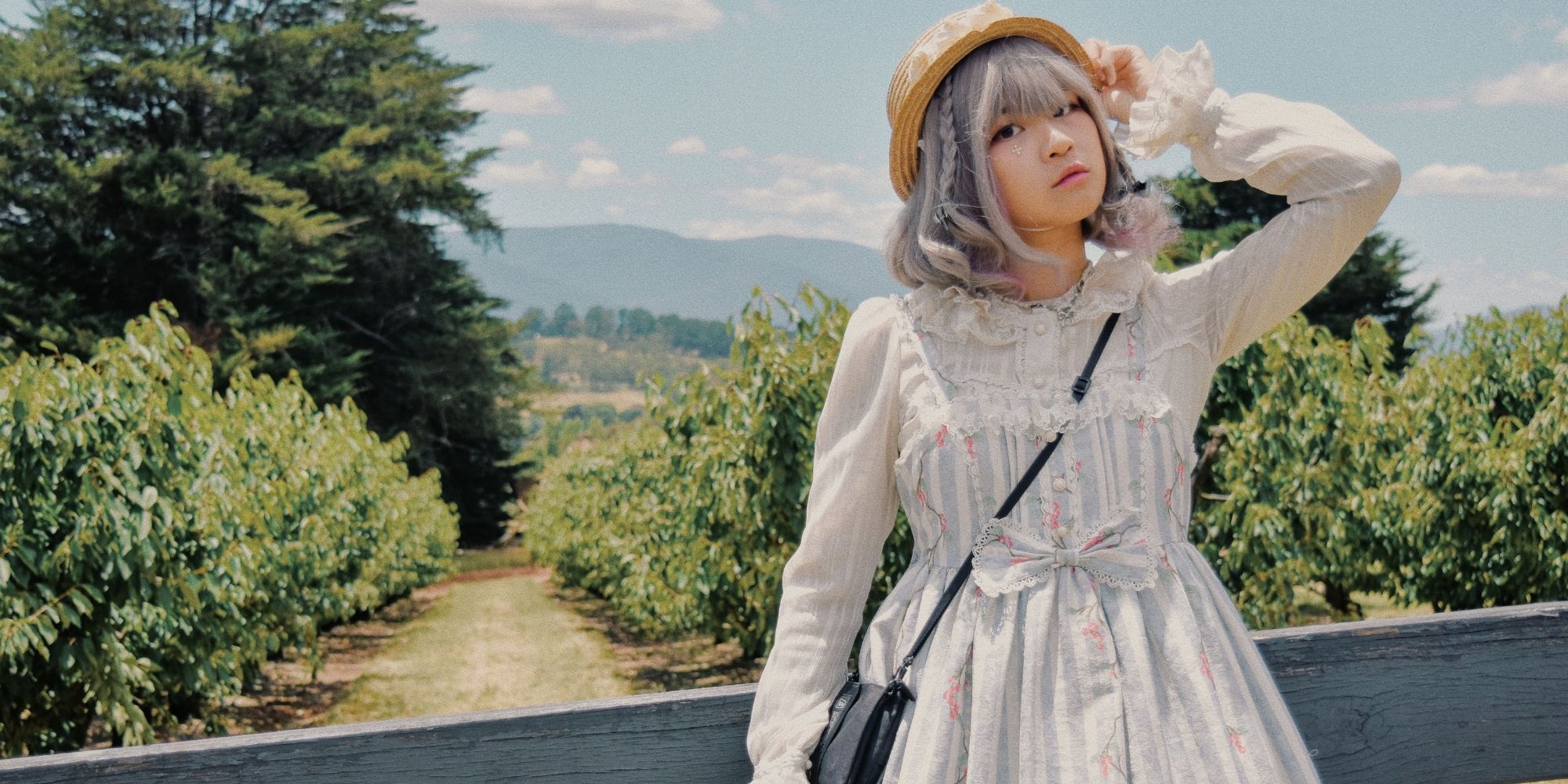
If you have spent any time on social media lately, you have probably noticed a certain aesthetic popping up with increasing frequency. Elaborate frilled dresses. Voluminous petticoats. Lace headdresses. Parasols. An overall quality of Victorian-era elegance that feels simultaneously otherworldly and entirely intentional. That is Lolita fashion, and in 2026, it is having one of its most significant global moments yet.
Born in Japan, beloved across 25 countries, and championed by some of the most influential figures in Japanese pop culture and fashion, Lolita is one of the world's most visually extraordinary and most frequently misunderstood fashion subcultures. Here is everything you need to know about where it came from, what it looks like, and the icons who have made it famous.
What Lolita Fashion Actually Is
Before anything else, it is worth being clear about what Lolita fashion is.
Lolita fashion is a Japanese street style subculture that draws its visual inspiration from Victorian clothing and the French Rococo period of the 18th century. It is characterized by elaborate, voluminous skirts layered over multiple petticoats, lavish decoration with frills, lace, and ribbons, and distinctive accessories including headdresses, parasols, and ornate shoes. The overall aesthetic is one of deliberate elegance, cuteness, and meticulous attention to detail.
As Millennia Nan, the owner of independent Lolita brand Sleepyland, describes it: the style is about "expressing this love for femininity and this love for extravagance and attention to detail — celebrating the love for intricate details, craftsmanship, and creativity all in the form of clothing."

Where It Came From
Lolita fashion first emerged in the early 1990s as a form of street fashion in the Harajuku district of Shibuya City, Tokyo. In those early years, before social media and international e-commerce existed, the style spread primarily through street snap magazines like KERA, which documented and celebrated the looks appearing on Harajuku's streets and gave aspiring practitioners a visual reference point.
The aesthetic drew from multiple sources. French Rococo art and design, with its emphasis on delicate ornamentation, pastel palettes, and graceful femininity, provided the foundational visual language. Victorian clothing, with its structured bodices, full skirts, and elaborate trim, provided the silhouette. And the Japanese cultural love of kawaii (cuteness) as an aesthetic value gave the style its distinctive emotional quality. Born in Japan and inspired by French Rococo style, the fashion evolved into a uniquely Japanese form of fashion culture.
A major turning point came in 2004, when the Japanese film Shimotsuma Monogatari, known internationally as Kamikaze Girls, brought Lolita fashion to mainstream attention for the first time. The film followed a passionate Lolita fashion devotee navigating rural Japan, and its success introduced the aesthetic to a much wider audience. The wider attention was not always welcome. As interest increased, so did social biases and restrictions, with practitioners sometimes facing criticism for wearing the style in public spaces.
Despite these challenges, the community remained steadfastly loyal, and the global spread of internet culture in the 2010s allowed Lolita fashion to find enthusiasts far beyond Japan. LiveJournal, then Facebook, then Discord, then TikTok, each successive platform carried the aesthetic further around the world and connected practitioners across countries and continents.
The Substyles: One Aesthetic, Many Languages
One of the things that makes Lolita fashion so rich as a visual culture is the breadth of its internal variation. The term covers a wide range of distinct substyles, each with its own visual identity and community.
Sweet Lolita (Sweet) The most immediately recognizable substyle and the one most associated with the aesthetic in Western media. Sweet Lolita features pastel color palettes, particularly pinks, lavenders, and mints, motifs including strawberries, cherries, bows, and confections, and an overall effect that is deliberately cute and fairy-tale-like. The silhouette is typically full and heavily petticoated, with sweet little sweaters or cardigans.
Gothic Lolita (Gothic) The darkest and perhaps most architecturally dramatic of the substyles. Gothic Lolita pairs the same structured silhouette with a palette of blacks, deep purples, and dark reds, and incorporates motifs including crosses, bats, roses, and Victorian mourning imagery. The result is simultaneously elegant and darkly beautiful. This substyle has attracted some of the most devoted practitioners and the most high-profile celebrity advocates.
Classic Lolita The most understated of the main substyles. Classic Lolita uses more muted, sophisticated color palettes, often featuring ivory, dusty rose, navy, and wine, with a silhouette that is slightly less voluminous than Sweet and decorative elements that lean toward vintage elegance rather than kawaii cuteness. It is the substyle most accessible to practitioners who want to incorporate Lolita elements into a broader wardrobe.
Wa Lolita and Qi Lolita Substyles that fuse the Lolita silhouette with traditional Japanese (Wa) or Chinese (Qi) clothing elements. These versions incorporate kimono fabrics, obi-style belts, and design elements drawn from East Asian historical dress, creating a visually compelling fusion that has attracted significant attention in China, where Lolita fashion has grown dramatically in recent years.
Punk Lolita A substyle that brings the structured Lolita silhouette into conversation with punk aesthetics: safety pins, studs, plaid, and a deliberately subversive energy that contrasts with the more refined versions of the style.

The Key Pieces: Building a Lolita Look
Understanding the components of a Lolita outfit helps explain why the aesthetic is so visually distinctive and why it requires such a different approach from mainstream fashion.
The Dress or Skirt The foundation of any Lolita outfit is either a dress (referred to as a one-piece or OP) or a blouse and skirt combination. The silhouette is typically A-line or bell-shaped, falling to knee length, and requires significant volume to achieve the characteristic fullness.
The Petticoat Petticoats are the structural element that gives Lolita fashion its distinctive volume. Multiple layers of crinoline or tulle are worn underneath the outer skirt to create the full, bell-shaped silhouette. Without a quality petticoat, the look simply does not work.
The Blouse When not wearing a one-piece dress, a Lolita blouse typically features a high neckline or Peter Pan collar, lace trim, puffed sleeves, and elaborate button detailing. The blouse is one of the most recognizable elements of the aesthetic.
Headwear A headdress of some kind is considered an essential element of a complete Lolita look. This might be a bow headdress, a bonnet, a mini hat, or a larger structured headpiece depending on the substyle. The headwear is one of the elements that most clearly signals the aesthetic to anyone familiar with it.
Legwear and Shoes Knee-high socks, over-the-knee socks, or elaborate tights in white, black, or printed designs are the standard legwear. Shoes are typically Mary Janes, platform shoes, or heeled boots, often featuring bows, buckles, or lace detailing.
Accessories The accessory layer of a Lolita outfit is where individual creativity has the most room to express itself. Parasols, elaborate bags, lace gloves, brooches, and multiple layers of jewelry all contribute to the finished look. The philosophy is one of considered excess: each element should be beautiful in isolation and together they should create something extraordinary.
The Icons: Who Is Wearing Lolita Fashion
Misako Aoki: The Official Ambassador
The most prominent and officially recognized figure in the global Lolita fashion community is Misako Aoki, a Japanese model who has been central to the subculture since its early years. In 2009, the Japanese Ministry of Foreign Affairs appointed Aoki as a Kawaii Ambassador, an official government role tasked with promoting Japanese pop culture and fashion internationally. She later founded the Japan Lolita Association in 2013 and served as its president.
Aoki has visited over 25 countries as part of her ambassadorial role, attending pop culture events and introducing Lolita fashion to audiences worldwide. She describes the aesthetic as sharing a mindset with the traditional Japanese kimono: wearing either style naturally encourages good posture and graceful manners, with the mental shift of adjusting one's behavior to match the elegance of the outfit reflecting a sensibility deeply rooted in Japanese culture.
Mana: The Gothic Lolita Pioneer
One of the most significant figures in the development of Gothic Lolita specifically is Mana, a member of the influential visual kei band Malice Mizer. Mana's distinctive personal style, which combined the dark elegance of Gothic Lolita with a theatrical visual identity, helped define the aesthetic for an entire generation of practitioners and gave Gothic Lolita much of its visual vocabulary. Mana also founded the Gothic Lolita brand Moi-meme-Moitie, which remains one of the most sought-after labels in the community.
The Kawaii Ambassadors: Yu Kimura and Shizuka Fujioka
Alongside Misako Aoki, Japanese celebrity models Yu Kimura and Shizuka Fujioka were also appointed as Kawaii Ambassadors by the Ministry of Foreign Affairs in 2009. Together, the three ambassadors attended pop culture events around the world, successfully bringing Lolita fashion to international attention and creating a community infrastructure that would allow the style to spread globally in the years that followed.
The Chinese Lolita Community
One of the most significant developments in Lolita fashion in recent years has been the extraordinary growth of the community in China, where the style has been embraced with a passion that has in many ways surpassed its home country. The number of domestic Lolita fashion brands in China has risen to more than ten times that in Japan. Recognized as the "ultimate social media-worthy fashion," it continues to attract significant attention across Chinese social media platforms, and a new generation of Chinese influencers and content creators have brought the aesthetic to enormous audiences.

Why Lolita Fashion Has Endured
Lolita fashion has now been a continuous presence in Japanese street style for over three decades, and its global following continues to grow. The reasons for its enduring appeal are worth understanding.
It is a community as much as a fashion. The bonds formed between Lolita practitioners through shared tea parties, online forums, and community events are genuine and lasting. The fashion is the entry point, but the relationships and the sense of belonging are what keep people engaged over the long term.
It is genuinely handcrafted and high quality. The most respected Lolita brands produce pieces that represent exceptional craftsmanship and attention to detail. For practitioners who care deeply about the quality and construction of their clothing, Lolita fashion offers something that fast fashion cannot replicate.
It is a form of self-expression that asks something of its wearer. Unlike many fashion aesthetics, Lolita requires deliberate effort, investment, and commitment. That effort is part of the point. The community has a saying that Lolita is not simply something you wear but something you embody.
And it is, quite simply, extraordinarily beautiful. The visual world of Lolita fashion, at its best, represents a level of decorative artistry that has no equivalent anywhere else in contemporary fashion.
The Bottom Line
Lolita fashion is one of the world's most visually extraordinary and community-driven fashion subcultures. Born in Tokyo's Harajuku district, spread globally through internet culture and official ambassadorship, and loved by a devoted international community that continues to grow, it is a genuinely unique phenomenon in the history of fashion.
It is also, as its most devoted practitioners will tell you, far more than just clothing. It is a mindset, a community, a form of creative expression, and a celebration of craftsmanship that stands entirely on its own terms.
The frills are just where it starts.
Grace leads the editorial vision behind 405Threads’ coverage of celebrity style, fashion trends, and wardrobe essentials. With a lifelong passion for fashion, a diverse cultural background, and expertise in trend forecasting, celebrity fashion analysis, and style curation, she brings readers a global perspective that remains accessible and relevant to everyday life. Grace believes fashion is about more than following trends – it’s about self-expression, confidence, and individuality.